
How to Build a Source Table With AI for Reliable Research
A source table turns scattered research into structured evidence you can actually check. This guide shows how to use AI to organize sources, claims, citations, dates, limitations, and conflicting evidence without treating AI-generated research as automatically reliable.
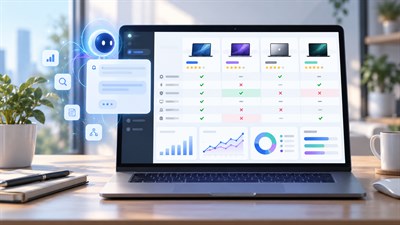
How to Create a Competitor Comparison Table With ChatGPT
ChatGPT can turn scattered competitor research into a clear side-by-side comparison table—but only if you give it consistent criteria and reliable source material. This guide shows a practical workflow for comparing competitors, checking claims, and turning the results into a useful decision-making table.

How to Research a Company With ChatGPT Before a Meeting or Interview
ChatGPT can turn hours of scattered company research into a focused briefing — but only if you give it reliable sources and verify what it finds. This guide shows how to research a company with ChatGPT before a meeting or interview, what to investigate, which prompts to use, and how to turn the results into useful questions and talking points.

ChatGPT Deep Research vs Regular ChatGPT: When Each One Makes Sense
ChatGPT Deep Research can investigate complex questions across multiple sources, while regular ChatGPT is usually faster for everyday work. This guide shows how to choose the right mode based on the task, evidence required, time available, and cost of getting the answer wrong.

How to Use ChatGPT Deep Research for Work: A Practical Verification Workflow
ChatGPT Deep Research can turn a complex work question into a cited report—but citations do not make the report automatically reliable. This guide shows a practical workflow for scoping research, controlling sources, verifying important claims, and turning the result into work you can actually use.

How to Use ChatGPT for Research Without Hallucinated Sources
ChatGPT can speed up research, but a confident answer is not the same as verified evidence. This guide shows how to use ChatGPT to find, organize, compare, and validate information without relying on invented sources or unsupported claims.

How to Summarize a Research Paper With ChatGPT: An Accurate Workflow
A practical workflow for summarizing research papers with ChatGPT without trusting a one-shot summary. Extract the study design, evidence, findings, limitations, and source locations first—then create the final summary.

AI SWOT Analysis: Useful Tool or False Confidence?
AI can draft a SWOT analysis quickly, but speed can create false confidence. This guide shows how to use AI for SWOT at work, validate its output, avoid generic strategy advice, and keep human judgment in control.

Market Research With AI: A Practical Framework for Reliable Decisions
A practical framework for using AI in market research without blindly trusting AI outputs. Learn how to define the business question, collect sources, compare competitors, analyze customers, validate findings, and turn research into better decisions.

How to Do Competitor Research With AI: A Practical Workflow for Work
Competitor research with AI can save hours, but only if you structure the task correctly. This guide shows how to use AI to compare competitors, extract positioning, analyze reviews, find content gaps, and turn messy sources into useful business insight.
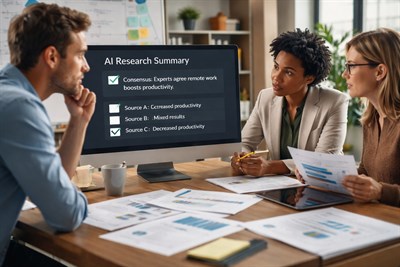
When AI Research Creates False Consensus: Why AI Makes Weak Evidence Look Like Agreement
AI research tools can unintentionally create a false sense of agreement between sources. When AI summarizes multiple articles, it often compresses nuance and disagreement into a single narrative. This guide explains how false consensus appears, why it happens, and how to structure research prompts to prevent misleading conclusions.

Multi-Source Research With AI (Safely Structured): A Practical Workflow for Reliable Results
A practical guide to running structured multi-source research with AI. Learn how to gather, compare, and verify information across sources while avoiding hallucinations and hidden bias.