An AI SWOT analysis can look impressive in seconds. You ask a tool to analyze a product, company, project, or market, and it returns a neat matrix of strengths, weaknesses, opportunities, and threats. For a busy team preparing for a meeting, this feels useful. It saves time, organizes scattered thoughts, and gives people something concrete to discuss.
But there is a problem: a polished SWOT matrix is not the same as reliable strategy. AI can make weak assumptions sound confident. It can mix real facts with generic business language. It can fill gaps instead of exposing them. At work, that matters because teams often use SWOT analysis to support decisions about launches, budgets, hiring, positioning, operations, and market entry.
An AI SWOT analysis can be a useful working draft, but it should never be treated as a finished decision. Its real value is not instant certainty — it is faster structure, sharper questions, and clearer gaps for humans to verify.
This guide explains where AI helps, where it creates false confidence, how to write better prompts, and how to validate the output before using it in a real business decision.
What Is an AI SWOT Analysis?
A traditional SWOT analysis is a simple strategic framework that organizes information into four categories: strengths, weaknesses, opportunities, and threats. Strengths and weaknesses are internal factors. They describe what a team, company, product, or project already has or lacks. Opportunities and threats are external factors. They describe what is happening outside the organization: market shifts, competitors, regulation, customer behavior, technology, or economic conditions.
An AI SWOT analysis uses an AI tool to help generate, organize, critique, or refine that matrix. The tool may work from a short description, pasted research notes, customer feedback, meeting transcripts, competitor summaries, sales data, or a specific decision question.
However, AI does not automatically understand your business. It does not know your actual margins, team politics, customer objections, hidden constraints, operational capacity, or leadership priorities unless you provide them. If the context is shallow, the SWOT will usually be shallow too.
Use AI SWOT analysis as a thinking accelerator, not as a truth engine. The output is only as strong as the context, evidence, and constraints behind it.
Why Teams Use AI for SWOT Analysis at Work
Teams use AI for SWOT analysis because real workplace decisions are often messy. Information comes from different sources: sales calls, customer complaints, competitor pages, analytics dashboards, market reports, team opinions, and leadership assumptions. Before a meeting, someone may need to turn all of that into a clear structure quickly.
AI can help when a team needs to prepare for a strategy discussion, compare several options, create a first draft from research notes, identify blind spots, or turn unstructured information into a format that managers can review. It is especially useful at the beginning of the process, when the goal is not to decide yet, but to ask better questions.
For broader strategic choices, AI SWOT works best when it is connected to a clear decision process. See also Decision Frameworks Enhanced by AI (With Human Control).
The best use case is not “AI, tell us what to do.” The better use case is: “AI, help us structure what we know, show what we do not know, and prepare a stronger discussion for the humans who own this decision.”
Where AI SWOT Analysis Helps Most
Turning Messy Research Notes Into Structure
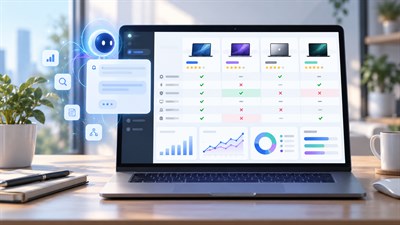
Imagine a team has collected notes from competitor websites, customer reviews, internal sales feedback, and product usage data. The notes are useful, but not organized. AI can sort the information into strengths, weaknesses, opportunities, and threats, while also identifying repeated themes and contradictions.
This is valuable because teams often waste time debating structure before they debate substance. AI can create the first structure quickly. The team can then spend more time checking whether the structure is true.
Finding Blind Spots Before a Meeting
A human team may focus on what it already believes. AI can help challenge that by asking what assumptions are unsupported, what risks are missing, and what evidence would weaken the current argument. This is not the same as expert judgment, but it is useful as a pressure test.
Comparing Strategic Options
AI SWOT is more useful when it compares specific decisions instead of analyzing a company in general. For example, instead of asking for “a SWOT analysis of our product,” a team can compare three options: launch now, delay the launch, or launch first in one niche segment.
That comparison makes the SWOT more decision-ready. It forces the team to look at trade-offs, not just isolated bullet points.
Creating a First Draft for Human Review
AI is good at creating a first version that humans can edit. This is useful when a manager needs a discussion document, a consultant needs a client workshop draft, or a founder needs to organize thoughts before speaking with advisors.
Example: A marketing team considering a new B2B newsletter can ask AI to separate internal strengths such as expert access and an existing audience from external opportunities such as market demand, competitor gaps, and search trends. The team must still verify every claim before using the SWOT in a campaign decision.
Real Examples of AI SWOT Analysis
Example 1 — Product Launch
A SaaS company is preparing to launch a new reporting dashboard. The team wants to know whether the launch should happen this quarter or be delayed until onboarding and documentation are stronger.
AI can help draft a SWOT based on internal notes. Possible strengths might include existing user data, a current customer base, product integrations, and direct feedback from users who requested better reporting. Weaknesses might include unclear pricing, limited support capacity, weak onboarding, and incomplete documentation.
Opportunities could include demand for reporting automation, upsell potential, and a chance to reduce manual customer success work. Threats might include established competitors, privacy concerns, low switching costs, and customers comparing the dashboard to more mature analytics tools.
But none of this is enough for a decision. The team still needs to check real support tickets, churn data, usage behavior, competitor pricing, and sales objections. The AI draft is useful because it creates a map. It is dangerous if the team mistakes the map for the territory.
Example 2 — Local Service Business
A small agency is considering whether to offer AI-assisted research services to clients. The owner wants to know if this could become a paid service or whether it would create too much quality risk.
AI can help identify potential strengths, such as existing client trust, content production experience, local market knowledge, and the ability to package research into reports. Weaknesses might include lack of a formal quality-control process, unclear pricing, and possible gaps in data verification.
Opportunities may include clients needing faster competitor research, content ideas, market summaries, and campaign planning. Threats may include clients using AI tools directly, privacy concerns, inaccurate outputs, and reputational damage if the agency delivers weak research.
The human follow-up is essential. The agency should speak with 5–10 clients, test willingness to pay, define what data can and cannot be uploaded into AI tools, and build a manual review checklist before selling the service.
Example 3 — Team Decision
An operations team is deciding whether to move weekly reporting to an AI-assisted workflow. Today, reports are created manually from spreadsheets, dashboards, and team updates. The process is slow, but managers trust it.
AI can help outline strengths such as speed, consistency, reduced repetitive work, and faster summaries for leadership. Weaknesses may include unclear ownership, possible mistakes in interpretation, lack of training, and inconsistent source data.
Opportunities may include better dashboards, faster management updates, and more time for analysis instead of formatting. Threats may include privacy risks, overreliance, wrong conclusions, and a gradual decline in human understanding of the numbers.
The team should not adopt the workflow immediately based on the SWOT. A safer approach is to run a one-month test, compare AI-assisted reports with manual reports, assign a human reviewer, and define which data is forbidden in AI tools.
AI SWOT Analysis Prompt Blocks
Good prompts do not simply ask AI to “make a SWOT.” They define the decision, provide context, require evidence, and ask the AI to identify uncertainty. The following prompt blocks can be adapted for real work.
Basic AI SWOT Prompt
Prompt: Create a SWOT analysis for [company/product/project]. Use only the context below. Separate internal factors from external factors. For each point, add a confidence level: high, medium, or low. If evidence is missing, say what information is needed instead of guessing. Context: [paste context].
Evidence-Based SWOT Prompt
Prompt: Build an evidence-based SWOT analysis from the following notes. For every strength, weakness, opportunity, and threat, quote or summarize the specific evidence that supports it. Mark unsupported assumptions clearly. Do not invent market facts. Notes: [paste research notes].
Critical Review Prompt
Prompt: Review this SWOT analysis as a skeptical strategy advisor. Identify generic points, weak assumptions, missing evidence, duplicated ideas, and items placed in the wrong quadrant. Then suggest a cleaner version with only the strongest points. SWOT: [paste SWOT].
Decision-Ready SWOT Prompt
Prompt: Convert this SWOT analysis into decision support. Identify the top 3 strategic implications, the riskiest assumption, the evidence we still need, and the decision that should not be made until those gaps are checked. SWOT: [paste SWOT].
The False Confidence Problem
The main danger of AI SWOT analysis is not that it produces a rough draft. Rough drafts are useful. The danger is that the draft looks finished. It has four categories, confident wording, strategic language, and a clean structure. That can make people feel that real analysis has already happened.
AI often fills gaps with plausible business language. If it does not know your customer retention problem, it may still write about “strong customer loyalty.” If it does not know your budget constraints, it may suggest “expanding into new markets.” If it does not know your operational bottlenecks, it may recommend “scaling the service offering.” These statements may sound reasonable and still be wrong.
The danger of AI SWOT analysis is not that it produces a bad first draft. The danger is that the draft looks complete enough for people to stop investigating.
False confidence is especially risky in meetings. A team may start discussing AI-generated bullet points instead of questioning the assumptions behind them. The conversation shifts from “Is this true?” to “How should we act on this?” That shift can happen too early.
How to Validate an AI-Generated SWOT
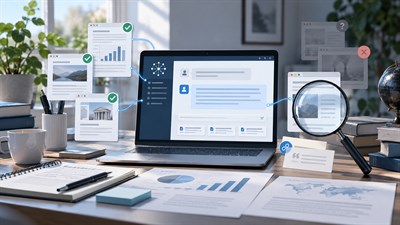
Validation is what separates useful AI support from risky AI theater. Before using an AI-generated SWOT in a decision, the team should review every quadrant carefully.
Check Quadrant Logic
Strengths and weaknesses should describe internal factors: resources, skills, assets, processes, limitations, team capacity, product quality, data, budget, or reputation. Opportunities and threats should describe external factors: market demand, competitors, regulation, technology, customer behavior, economic conditions, or platform changes.
If AI places an external trend under strengths or an internal limitation under threats, the analysis needs correction.
Ask What Evidence Supports Each Point
Every point should be connected to evidence. That evidence might be customer feedback, financial data, sales calls, market research, analytics, expert interviews, support tickets, or direct observations from the team.
If a point has no evidence, it should be marked as an assumption. If the assumption is important, the team should decide how to test it.
Remove Generic Points
Generic SWOT points are common in AI output. Examples include “strong brand,” “growing market,” “increased competition,” “improve customer experience,” or “leverage technology.” These phrases are not useful unless they are specific.
A better version would explain which brand strength matters, which market is growing, which competitors are relevant, what customer experience problem exists, and what technology advantage is realistic.
Add Priority
A SWOT with twenty equal bullet points does not support a decision. The team should rank items by impact, urgency, and confidence. A high-impact threat with low confidence may deserve research. A high-confidence weakness with high impact may require immediate action.
Use Multiple Sources
External facts should not depend on a single AI answer. Market size, competitor positioning, legal requirements, customer demand, and pricing trends should be checked against multiple sources.
If the SWOT depends on external facts, do not rely on a single AI answer. Use a structured research process like Multi-Source Research With AI (Safely Structured): A Practical Workflow for Reliable Results.
A Safer Workflow for AI SWOT Analysis
Step 1: Define the Decision
Do not ask AI for a vague SWOT “about the company.” Start with a specific decision. For example: Should we launch this product now? Should we enter this market? Should we invest in this channel? Should we change this workflow? A clear decision produces a more useful SWOT.
Step 2: Provide Context
Give the AI tool enough context to work with. Include the company or project description, target users, constraints, internal data, known competitors, current problem, decision deadline, and what the team already knows.
The more specific the context, the less likely the tool is to fill gaps with generic advice.
Step 3: Generate the First SWOT
Ask AI to create a first draft, but require confidence levels and missing information. This keeps uncertainty visible. The output should show what is supported, what is assumed, and what needs more research.
Step 4: Challenge the SWOT
Use a second prompt to review the first answer. Ask AI to identify generic claims, weak assumptions, missing evidence, duplicated ideas, and items in the wrong quadrant. This step often improves the quality of the analysis before humans review it.
Step 5: Verify With Humans and Sources
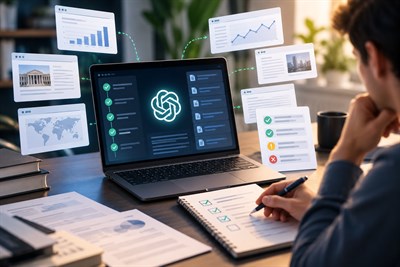
Bring the draft back to people who understand the business. Ask sales, support, operations, finance, product, or leadership to review the points that affect their area. Check external facts with reliable sources. Remove anything that cannot be supported.
Step 6: Convert SWOT Into Decisions
A SWOT matrix is not the end of the process. The final step is to turn it into action. Decide what to do, what not to do, what to test, what to monitor, and who owns the next step.
A useful AI SWOT does not end with four boxes. It ends with clearer choices, visible assumptions, assigned responsibility, and a list of evidence still needed before action.
Limits and Risks of AI SWOT Analysis
AI May Invent or Overstate Facts
If you ask AI to analyze a market without giving it sources or allowing it to check current information, it may produce claims that sound plausible but are not verified. This is especially risky for market size, competitor strength, regulation, pricing, and customer demand.
AI Often Produces Generic Strategy Language
AI tools are good at creating business-sounding phrases. That can be a weakness. Phrases like “increase brand awareness,” “leverage innovation,” “improve customer experience,” and “monitor competitors” are not useful unless they are tied to specific evidence and decisions.
AI Does Not Know Hidden Constraints
Many strategic decisions depend on information that is not written down. AI may not know that the team is overloaded, the budget is frozen, a key partner is unreliable, leadership has already rejected an option, or customer support is close to capacity.
AI Can Flatten Disagreement
In real teams, disagreement is often useful. Sales may see one problem, operations another, and finance another. AI can summarize these views in a neutral way that sounds tidy but removes important tension. A good decision process should preserve meaningful disagreement until it is examined.
AI Can Confuse Plausibility With Truth
A point can sound reasonable and still be false. This is one of the most important risks of AI-generated analysis. The language may be polished, but the reasoning may be weak.
When You Should Not Use AI SWOT Analysis
AI SWOT analysis should not be used as the main basis for decisions where the cost of being wrong is high and the facts require expert verification.
Be especially careful when the decision involves legal, medical, financial, compliance, privacy, employment, or reputation risk. In those cases, AI may still help organize questions, but it should not be treated as an authority.
You should also avoid using AI SWOT analysis with confidential data unless your organization has approved tools, clear data rules, and a safe workflow. Do not paste sensitive customer data, private contracts, employee information, financial details, or proprietary strategy into public AI tools without permission.
AI SWOT is also weak when the team cannot verify external facts. If nobody will check the market, customers, competitors, or regulations, the output may become a confident-looking guess.
Final Human Responsibility
AI can support the SWOT process. It can structure messy information, compare options, suggest questions, challenge assumptions, and turn notes into a readable matrix. Used well, it can make a team better prepared for a strategic conversation.
But AI cannot own the decision. It does not carry the consequences. It does not understand every hidden constraint. It does not know which trade-offs are acceptable for your team, customers, or organization.
AI can support the SWOT process, but it cannot own the decision. The final responsibility belongs to the people who understand the business context, verify the evidence, and accept the consequences.
The safest way to use AI SWOT analysis is to let it help you think faster without letting it stop you from thinking. Use it to create a draft, expose assumptions, and prepare better questions. Then bring the judgment back to humans.
Use AI SWOT analysis to think faster — not to stop thinking.
FAQ
What is an AI SWOT analysis?
An AI SWOT analysis uses artificial intelligence to help identify and organize strengths, weaknesses, opportunities, and threats for a business, project, product, or decision. It is most useful as a structured first draft that humans review and validate.
Can AI do a SWOT analysis?
Yes, AI can generate a SWOT analysis, but it should not be treated as automatically correct. AI can organize information and suggest angles, but the user must provide context, check evidence, and correct weak assumptions.
What is the best prompt for AI SWOT analysis?
The best prompt gives AI a clear decision, specific context, available evidence, constraints, and instructions not to invent facts. It should also ask AI to mark confidence levels and identify missing information.
Is AI SWOT analysis reliable?
AI SWOT analysis can be reliable as a starting point if it is based on accurate input and reviewed by humans. It becomes unreliable when the AI is asked to guess market facts, internal capabilities, or strategic risks without evidence.
What are the risks of using AI for SWOT analysis?
The main risks are generic advice, invented facts, misplaced SWOT categories, overconfidence, privacy problems, and weak human review. A polished AI-generated matrix can look more certain than it really is.
How do you validate an AI-generated SWOT?
Validate it by checking the logic of each quadrant, asking for evidence, removing generic claims, comparing external facts with multiple sources, and discussing the final version with people who understand the business context.
Should AI make strategic decisions based on SWOT?
No. AI can support strategic thinking, but it should not make the final decision. Humans remain responsible for judgment, trade-offs, ethics, context, and consequences.