AI contract review sounds simple: upload a PDF or Word file, ask for risks, and get a neat summary. At work, the reality is more serious. A missed renewal clause, a broad indemnity obligation, a vague scope of work, or a one-sided termination term can create real financial, operational, and legal consequences.
Contracts are not only a legal department problem. Sales teams deal with NDAs and customer terms. Procurement teams review vendor agreements. HR teams handle employment contracts. Freelancers and consultants sign service agreements. Operations teams manage software subscriptions, renewals, data processing terms, and supplier obligations. In many workplaces, people need to understand contract language before a lawyer has time to review every detail.
This is where AI contract review can be useful. AI can summarize long documents, extract key clauses, highlight deadlines, compare versions, and prepare better questions for legal review. But the main question is not “Can AI read a contract?” The better question is: Which parts of contract review can AI safely assist with, and which parts must remain human responsibility?
Key takeaways: AI contract review is useful for first-pass analysis, summaries, clause extraction, issue spotting, and preparing questions for legal teams. It should not be treated as legal advice, a replacement for a lawyer, or the final decision-maker for high-risk agreements. Humans remain responsible for judgment, negotiation strategy, compliance, and final approval.
This article is for educational and workflow purposes only. It is not legal advice. For legal decisions, consult a qualified professional.
What Is AI Contract Review?
AI contract review is the use of artificial intelligence to analyze contract text, summarize key terms, extract obligations, flag potential risks, and prepare issues for human review. It is best used as a support tool, not as final legal approval.
In practice, AI contract review may involve uploading a PDF, pasting contract text, reviewing a Word document, comparing two versions, or checking a contract against a company playbook. The AI tool may identify payment terms, renewal rules, termination rights, liability caps, confidentiality obligations, governing law, intellectual property clauses, or missing provisions.
However, AI does not truly “understand” the full legal and commercial consequences of a contract in the way a qualified human reviewer does. It can recognize patterns in language, summarize information, and make useful predictions, but it does not carry professional responsibility. It also may not know your company’s risk appetite, negotiation history, regulatory obligations, or the specific business context behind the deal.
Example: A procurement manager uploads a 24-page supplier agreement and asks AI to list payment terms, renewal dates, termination rights, liability caps, data protection obligations, and clauses that require legal review. The output becomes a checklist, not the final legal answer.
How AI Can Help With Contract Review
AI is most useful when it turns a long, dense document into a structured review process. Instead of reading a 40-page agreement from beginning to end with no framework, a business user can ask AI to extract key terms, list obligations, identify unusual language, and prepare specific questions for the legal team.
Summarizing long contracts
One of the most common uses of AI contract review is creating a first-pass summary. A good summary should not simply say “this is a standard service agreement.” It should identify the parties, contract type, effective date, term, renewal rules, payment structure, main obligations, termination rights, confidentiality duties, liability language, and governing law.
This is especially useful for busy teams that need to understand the commercial shape of a document before deciding whether it deserves deeper legal review. For example, a sales manager may need to know whether an NDA contains a non-solicitation clause before sending it to a partner. A procurement lead may need to know whether a vendor agreement renews automatically. AI can help surface those points quickly.
Extracting key terms and deadlines
Contracts often hide important dates and obligations inside long paragraphs. AI can help extract them into a checklist. Common items include payment due dates, renewal notice periods, termination windows, service-level obligations, confidentiality survival periods, audit rights, data processing obligations, and document delivery deadlines.
This is valuable because many contract risks are not dramatic legal disputes. They are missed reminders, forgotten notice periods, unclear deliverables, and operational obligations that nobody tracked after signing.
Flagging unusual or risky clauses
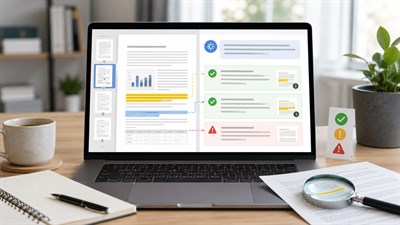
AI can also help flag clauses that may deserve human attention. Examples include unlimited liability, broad indemnity, automatic renewal, unilateral termination rights, non-compete language, exclusivity, intellectual property assignment, vague service descriptions, unusual penalty clauses, governing law mismatch, and confidentiality terms that last longer than expected.
The important word is “flag.” AI can point to language that looks risky, but a human must decide whether the risk is real, acceptable, negotiable, or normal for that type of agreement.
Comparing contract versions
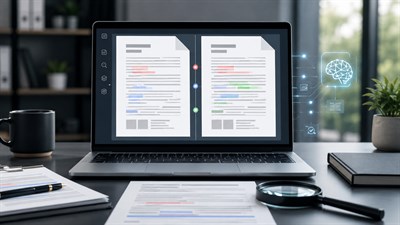
AI can help compare two versions of a contract and explain what changed in plain language. This is useful when reviewing redlines, revised vendor terms, customer edits, or updated employment documents. It can summarize changes by topic, such as payment, liability, termination, confidentiality, and intellectual property.
A strong comparison prompt should ask AI to quote or reference the changed clause. Without references, the output may sound helpful but be difficult to verify.
Preparing questions for legal review
One of the safest and most practical uses of AI contract analysis is preparing questions for a qualified reviewer. Instead of sending a lawyer a vague message like “Can you review this contract?”, a business user can send a structured list: “Clause 7 has no liability cap. Clause 10 renews automatically unless we give 90 days’ notice. Clause 13 assigns all developed IP to the client. Are these acceptable?”
To understand why AI can summarize and extract information but still miss meaning, context, or document structure, see How AI Reads Documents: What It Understands and What It Misses.
| Contract review task | Good use of AI | Human review required |
|---|---|---|
| Summarize clauses | Create a first-pass overview of key terms | Verify whether the summary is complete and accurate |
| Extract deadlines | List renewal dates, notice periods, and payment due dates | Confirm dates against the original contract and business calendar |
| Flag unusual terms | Identify language that may deserve attention | Decide whether the risk is acceptable or negotiable |
| Compare versions | Explain changes between drafts | Decide whether to accept, reject, or negotiate changes |
| Interpret legal impact | Provide a non-final explanation of possible issues | Qualified legal judgment is required |
| Approve signing | Not appropriate as the final authority | Only an authorized human reviewer should approve signing |
Real Examples of AI Contract Review at Work
AI contract review becomes easier to understand when we look at real workplace scenarios. The goal is not to ask AI, “Is this contract safe?” That question is too broad and creates false confidence. The better approach is to ask AI to extract facts, identify unclear terms, and prepare review questions.
Example 1 — NDA before a sales call
A sales team receives an NDA before a discovery call with a potential enterprise customer. The team wants to move quickly, but the document includes strict confidentiality language, a long survival period, and a non-solicitation clause.
AI can help identify the confidentiality period, permitted disclosures, return or destruction obligations, non-solicitation language, unusual penalties, and whether the NDA is mutual or one-sided. It can also prepare questions such as: “Does this NDA restrict future marketing case studies?” or “Does this non-solicitation clause affect our ability to hire from the customer’s network?”
A human still needs to decide whether the NDA fits the company’s sales process, whether legal approval is required, and whether any clause conflicts with business plans.
Example 2 — Vendor agreement
A procurement manager is reviewing a vendor agreement for a software tool. The document includes a one-year term, automatic renewal, a 60-day cancellation window, data processing obligations, and a limitation of liability clause.
AI can extract the renewal rules, payment schedule, service-level commitments, liability cap, data security language, termination rights, and audit obligations. It can also flag if the vendor’s liability is capped too low compared with the value of the data or service.
The risk is that AI may not understand the company’s operational dependence on the vendor. A low liability cap may be acceptable for a minor tool but unacceptable for a system that handles customer data, payments, or core business operations.
Example 3 — Employment contract
An HR manager reviews an employment contract for a senior hire. The contract includes probation language, bonus terms, intellectual property ownership, confidentiality duties, and post-employment restrictions.
AI can summarize the probation period, explain bonus conditions, identify restrictive covenants, extract termination language, and flag IP assignment clauses. It can also create a plain-language summary for internal review.
However, employment law is highly jurisdiction-specific. A clause that looks normal in one country, state, or industry may be unenforceable, incomplete, or risky in another. AI should not be used as the final authority for employment contract approval.
Example 4 — Freelance or service contract
A freelancer receives a service agreement from a client. The contract describes the project broadly but does not clearly define deliverables, acceptance criteria, payment milestones, revision limits, or ownership of final work.
AI can identify vague scope language, missing acceptance rules, unclear payment triggers, broad IP transfer language, and termination terms that may leave the freelancer unpaid for completed work. It can also generate a list of negotiation questions.
A human still needs to judge whether the commercial relationship is worth the risk and whether the proposed changes are realistic.
Example 5 — Partnership agreement
A business development team receives a partnership agreement that includes co-marketing obligations, shared leads, revenue share, confidentiality, brand usage, and termination language.
AI can summarize obligations by party, identify exclusivity language, extract reporting duties, and flag ambiguous revenue-share terms. It can also ask whether the contract defines what happens to shared leads after termination.
The human decision is strategic: does the agreement support the partnership model, or does it create obligations the team cannot realistically fulfill?
Practical advantage: AI is most useful when the goal is not to “approve” a contract, but to make the review process faster, clearer, and easier to verify. It turns an unread document into a structured list of clauses, risks, questions, and next steps.
Prompt Blocks for AI Contract Review
Prompts matter. A vague prompt such as “Review this contract” often produces a vague answer. A safer prompt asks AI to extract specific information, cite clause numbers, avoid assumptions, and separate factual summary from possible risk indicators.
Before using any prompt: Do not upload confidential, personal, regulated, or client-sensitive contracts into public AI tools unless your company policy allows it. Remove sensitive data where possible and use approved tools for legal or confidential documents.
Prompt 1 — First-pass contract summary
Prompt: Review this contract as a first-pass business summary. Do not provide legal advice. Extract the parties, contract type, effective date, term, renewal rules, payment terms, main obligations, termination rights, confidentiality obligations, liability limits, governing law, and any clauses that should be reviewed by a qualified human. Cite the section or clause number for every point.
Prompt 2 — Risk spotting
Prompt: Analyze this contract for business and legal risk indicators. Create a table with four columns: clause, what it says, why it may matter, and recommended human review question. Focus on unlimited liability, indemnity, auto-renewal, termination, IP ownership, confidentiality, data protection, payment obligations, penalties, exclusivity, non-compete, and governing law. Do not invent missing information. If the contract is silent, say “not found.”
Prompt 3 — Missing clause checklist
Prompt: Based only on the text provided, identify important clauses that appear to be missing or unclear. Do not assume they exist. For each missing or unclear item, explain why it may matter in a business review and what question should be sent to legal counsel or the contract owner.
Prompt 4 — Compare against a company playbook
Prompt: Compare this contract against the following company contract playbook. For each clause, classify it as aligned, partially aligned, not aligned, or not found. Quote the relevant contract language briefly, explain the difference, and list the exact issue a human reviewer should decide. Do not make the final decision yourself.
Prompt 5 — Questions for legal review
Prompt: Prepare a concise list of questions for a legal reviewer. Group them by topic: liability, payment, termination, confidentiality, data protection, IP, governing law, operational obligations, and negotiation points. Each question must refer to a specific clause or explain that the issue was not found in the document.
Benefits of AI Contract Review
The main benefits of AI contract review are faster first-pass analysis, clearer summaries, consistent clause checklists, easier version comparison, and better preparation for legal review.
Faster first-pass review
AI can reduce the time needed to understand the basic structure of a contract. Instead of manually searching for every deadline, obligation, and exception, a reviewer can ask AI to extract them into a clear list. This is helpful when a team needs to triage multiple documents before deciding which ones need legal escalation.
Better visibility into long documents
Important contract terms are often spread across definitions, main clauses, schedules, annexes, and exhibits. AI can help bring related items together. For example, payment language may appear in one section, service levels in an attachment, and penalties in another schedule. AI can make the document easier to navigate.
Consistent checklists
AI can apply the same review checklist across multiple contracts. This is useful for teams that regularly review vendor agreements, NDAs, service contracts, or freelance agreements. A consistent prompt can ask for the same risk areas every time: liability, indemnity, renewal, termination, confidentiality, IP, data protection, governing law, and payment obligations.
Better preparation for legal teams
Legal teams often receive contracts with little context. AI can help business users prepare a cleaner handoff by summarizing commercial goals, extracting key clauses, and listing specific questions. This does not replace legal review. It makes legal review more focused.
Easier comparison between versions
When a counterparty sends a revised draft, AI can explain what changed. It can highlight new obligations, deleted protections, changed deadlines, or modified liability language. This helps reviewers understand whether the new version is better, worse, or simply different.
Best use case: AI contract review works best as a preparation layer. It helps business users understand what is in the document before a lawyer, manager, or authorized reviewer makes the final decision.
Risks and Limitations of AI Contract Review
The main risks of AI contract review are hallucinated conclusions, missed legal context, confidentiality exposure, poor handling of complex documents, and overreliance on outputs that have not been verified by a human.
For a broader framework on tasks where AI should not become the decision-maker, read Where AI Should Not Be Used: High-Stakes Decisions Explained.
AI can hallucinate or overstate risk
AI may produce confident conclusions that are not supported by the contract. It may say a clause is missing when it appears in another section. It may describe a risk too strongly. It may also create an explanation that sounds legally sophisticated but does not match the actual document language.
This is why every important AI output should be tied to a clause number, page reference, or direct quote. If the AI cannot point to the source, the reviewer should treat the conclusion as unverified.
AI may miss jurisdiction-specific legal issues
Contract interpretation depends on jurisdiction, industry, regulation, and context. A limitation of liability clause, employment restriction, data protection obligation, or governing law provision may have different consequences depending on where the parties operate and which law applies.
AI may provide a general explanation, but it should not be trusted as jurisdiction-specific legal advice. This is especially important for employment agreements, cross-border contracts, regulated industries, healthcare, financial services, consumer data, intellectual property, and high-value commercial deals.
AI may ignore business context
Some contract risks are not purely legal. They depend on the business model. A 90-day termination notice may be acceptable for one company and impossible for another. A strict service-level requirement may be normal for a software provider but unrealistic for a small agency. A broad IP assignment may be standard in one project and dangerous in another.
AI can identify the clause, but it may not know whether the clause fits your business reality.
AI can miss what is not written
One of the biggest limitations of contract review with AI is that the tool may focus on text that exists and fail to notice what is missing. A contract may lack acceptance criteria, a liability cap, a data processing clause, a termination-for-convenience right, a dispute resolution process, or a clear scope of work.
To reduce this risk, prompts should explicitly ask AI to identify missing or unclear clauses. Even then, a human reviewer must verify whether those clauses are required for the specific contract.
AI may mishandle tables, scans, annexes, and formatting
Many contracts are not clean blocks of text. They include scanned pages, signatures, tables, schedules, footnotes, images, exhibits, tracked changes, handwritten notes, and cross-references. AI may miss content if the document is poorly scanned, badly formatted, or split across attachments.
For example, the main contract may say “fees are listed in Schedule A,” while Schedule A contains a table with renewal prices and penalties. If AI does not read that table correctly, the summary may be incomplete.
Confidentiality and data protection risks
Contracts often contain confidential business information, personal data, pricing, client names, trade secrets, employee details, bank information, or regulated information. Uploading such documents into an unapproved AI tool can create security, privacy, and contractual problems.
Before using AI contract review, teams should understand company policy, tool settings, retention rules, access controls, and whether the document can be processed by that system. When in doubt, do not upload sensitive contracts into public tools.
AI can create false confidence
A polished AI summary can feel authoritative. This is dangerous. The output may be incomplete, based on a partial reading, or missing important context. The better the writing sounds, the easier it is to forget that the analysis still needs verification.
Important limitation: AI can support contract review, but it cannot carry professional responsibility, understand your full negotiation strategy, or guarantee that a contract is legally safe. Treat AI output as a draft analysis that must be checked against the document, company policy, and qualified human judgment.
| Risk area | Example clause issue | Why it matters | Human question to ask |
|---|---|---|---|
| Liability | No liability cap or a very low cap | Financial exposure may be too high or protection may be too weak | Is this level of liability acceptable for the deal value and risk? |
| Indemnity | Broad obligation to cover third-party claims | The company may accept responsibility beyond its control | Is the indemnity balanced and limited to appropriate claims? |
| Termination | No convenient exit right | The company may be locked into a poor relationship | Can we terminate if the service no longer works for us? |
| Renewal | Automatic renewal with long notice period | Missed notice can create unwanted costs | Who will track the renewal deadline? |
| Payment | Unclear milestones or late payment penalties | Disputes may arise over when payment is due | Are payment triggers clear and operationally realistic? |
| Confidentiality | Overly broad or indefinite obligations | The clause may restrict future communication or business activity | Is the confidentiality scope appropriate? |
| IP ownership | All work product assigned without exceptions | Pre-existing tools or reusable materials may be affected | Do we need to exclude background IP or templates? |
| Data protection | No clear data processing obligations | Privacy and security responsibilities may be unclear | Does this contract involve personal or regulated data? |
| Governing law | Unfamiliar or inconvenient jurisdiction | Disputes may become more expensive or complex | Is this jurisdiction acceptable for our company? |
| Exclusivity | Restriction on working with competitors | The company may lose future business opportunities | Is the exclusivity narrow, time-limited, and commercially justified? |
What Humans Must Still Review
AI can support contract review, but it should not decide whether a contract should be signed. Human reviewers must evaluate whether the deal is commercially acceptable, whether the risk matches the value of the relationship, whether the contract complies with company policy, and whether legal counsel is required.
Humans must also review the negotiation strategy. A clause may be risky but acceptable if the deal is strategically important. Another clause may look standard but be unacceptable because it conflicts with internal policy, insurance requirements, customer commitments, or regulatory obligations.
Human review is especially important for contracts involving high monetary value, employment relationships, personal data, intellectual property, regulated industries, cross-border obligations, long-term commitments, exclusivity, or unusual liability exposure.
| Task | AI can help | Human must decide |
|---|---|---|
| Summarize clauses | Yes | Whether the summary is complete |
| Flag unusual terms | Yes | Whether the risk is acceptable |
| Compare versions | Yes | Whether the change should be accepted |
| Identify missing clauses | Sometimes | Whether the clause is legally or commercially required |
| Interpret law | Limited | Qualified legal judgment |
| Approve signing | No | Authorized human reviewer |
A Safer Workflow for Using AI to Review Contracts
A safer AI contract review workflow starts with the assumption that AI is an assistant, not an approver. The process should separate extraction, analysis, verification, and decision-making.
Step 1: Check whether AI use is allowed
Before uploading or pasting a contract, check company policy. Some documents may be confidential, client-restricted, regulated, or covered by data protection rules. Use only approved tools for sensitive legal or business documents.
Step 2: Remove sensitive information where possible
If policy allows AI use, consider removing names, addresses, bank details, personal data, pricing details, signatures, and other sensitive information that is not needed for the review task. Redaction does not solve every confidentiality issue, but it can reduce unnecessary exposure.
Step 3: Ask AI for extraction before opinion
Start with factual extraction: parties, dates, obligations, payment terms, renewal rules, termination rights, liability limits, and governing law. Do not begin with “Is this contract safe?” A factual extraction is easier to verify and less likely to create false confidence.
Step 4: Ask for risks with clause references
When asking for risk analysis, require clause numbers, page references, or short quotes. This helps you verify the output against the original document. If the AI tool cannot support a claim with a source, treat it as unverified.
Step 5: Ask what is missing or unclear
After reviewing what is written, ask AI to identify what appears to be missing or unclear. This may include missing acceptance criteria, unclear deliverables, no liability cap, no data processing terms, no renewal notice process, or no dispute resolution clause.
Step 6: Verify against the original contract
Every important point should be checked against the original PDF or Word document. Pay special attention to tables, schedules, annexes, exhibits, definitions, cross-references, and footnotes. Do not rely on a summary if you have not checked the source.
Step 7: Escalate to legal or an authorized reviewer
Escalate the contract when the value is high, the relationship is sensitive, the document involves employment or personal data, the jurisdiction is unfamiliar, the liability exposure is significant, the IP terms are broad, or the contract creates long-term obligations.
Safe workflow example: A business user asks AI to extract payment terms, renewal dates, liability language, and termination rules from a vendor contract. Then they verify each item against the original PDF, mark unclear clauses, and send only the verified issue list to the legal team for final review.
Final Human Responsibility
AI can assist with contract review, but it cannot approve a contract. It can summarize, but humans must verify. It can flag issues, but humans must decide materiality. It can prepare legal questions, but it cannot replace legal advice. It can compare documents, but it cannot determine whether the business should accept the change.
The person or company using AI remains responsible for the decision. This matters because contract approval is not only a document task. It is a business, legal, operational, and risk decision. A contract may affect money, timelines, customer relationships, employee rights, data protection, intellectual property, and future disputes.
The safest approach is to use AI as a structured assistant: extract the facts, organize the issues, identify unclear language, prepare questions, and support human review. The final decision should remain with a qualified legal professional, manager, contract owner, or authorized decision-maker.
Final responsibility: The final contract decision belongs to a human reviewer, legal professional, manager, or authorized decision-maker — not to the AI tool. AI output should be treated as support material, not as approval, legal advice, or a substitute for professional judgment.
FAQ
Can AI review contracts?
AI can help review contracts by summarizing clauses, extracting key terms, flagging unusual language, and preparing questions for human review. However, it should not be treated as a lawyer or final decision-maker.
Is AI contract review reliable?
AI contract review can be useful for first-pass analysis, but its reliability depends on document quality, prompt quality, tool design, jurisdiction, and human verification. It may miss context, misread clauses, or produce confident but incomplete answers.
Can ChatGPT review a contract?
ChatGPT can help summarize and analyze contract text, but users should avoid uploading confidential documents unless policy allows it. Any output should be checked against the original contract and reviewed by a qualified human where legal risk exists.
What are the main benefits of AI contract review?
The main benefits are speed, structured summaries, clause extraction, issue spotting, version comparison, and better preparation for legal review. AI is especially useful when turning a long contract into a clear checklist.
What are the risks of using AI for contract review?
The main risks include hallucinations, missed clauses, wrong legal assumptions, poor handling of scanned PDFs or tables, confidentiality concerns, and overreliance on outputs that sound more certain than they are.
Can AI replace lawyers for contract review?
No. AI can support contract review, but it cannot replace legal judgment, negotiation strategy, jurisdiction-specific advice, or professional responsibility. High-risk contracts should be reviewed by qualified legal professionals.
What should I ask AI when reviewing a contract?
Ask AI to extract key terms, cite clause numbers, identify risky or missing provisions, explain unclear language, compare the contract against your playbook, and prepare questions for a human reviewer.
When should AI not be used for contract review?
AI should not be used as the final reviewer for high-value, regulated, employment, privacy, intellectual property, cross-border, or heavily negotiated contracts. It also should not be used with confidential documents unless the tool and company policy allow it.